
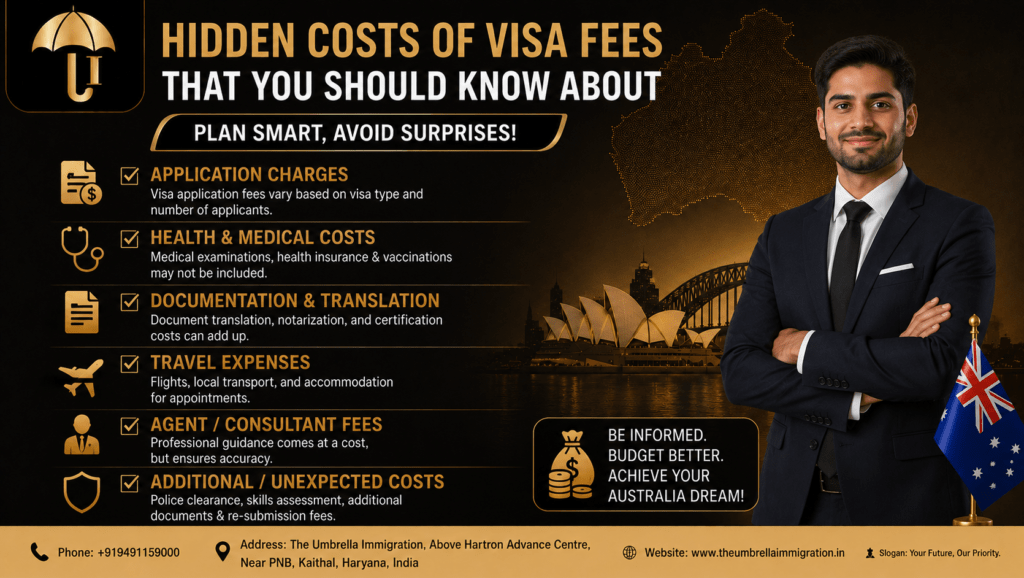
Visa Fees: Learn About Their Hidden Costs
One of the first numbers you need to be acquainted with when planning any international trip, whether that be for work, study or tourism is the visa fee on the embassy or consulate website. However, that figure alone is rarely the entire story. Applicants are taken aback to learn that “official” locations have low base fees, but on the back end additional charges can quietly add hundreds of dollars more. Here is the detailed page of all hidden costs that come and hit you by surprise while traveling.
1. Service and Processing Fees
These days, a lot of visa applications are processed at third-party service centers (such as VFS Global or similar outsourcing partners) instead of the embassy. Such centers generally impose their own service fee upon the government visa fee—merely for accepting and forwarding your documents. That fee is non-refund so it does not matter whether your visa is stamped or rejected.
2. Biometric and Appointment Fees
Biometric data, fingerprint and photograph collection at an authorized center is required for most visa categories now. A separate biometrics fee usually accompanies this. Certain centers also demand money for booking appointments or provide a priority slot in the cost if you need to reach there before the scheduled time.
3. Currency Conversion and Payment Charges
If you pay for your visa by card using a currency not in your own country, your bank or card issuing company may charge you a foreign transaction fee of 1-3% of the amount, as well as an unfavourable exchange rate. These costs can pile on pretty quickly over the course of an application (fee, service charge, biometric charge, each processed individually).
4. Document Translation and Notarization
Most of the visa applications need people to translate supporting documents, bank statements and employment letter to be translated into the official language of the destination country and in some cases require notarization or apostille. It does not include certified translation services and, of course, notary fees, which are rarely indicated in advance but compulsory.
4. Travel and Medical Insurance
Many other countries, particularly the Schengen Area member countries, require verification of a travel medical insurance with at least minimum coverage as part of visa requirements. It is bought separately and will vary from a few hundred dollars for short trips to thousands of dollars for long or older travelers.
5. Health Checkups and Vaccinations
It asks for, in case of work and long-term visas, for a medical exam from an authorized panel physician with respect to otherwise specified vaccinations. These appointments are paid for out of pocket and can be one of the more expensive hidden costs, especially if the required clinic is not covered under your basic health insurance.
6. Agent or Consultant Fees
Most of the applicants, especially for the first time opt for hiring a visa agent or immigration consultant to run the paper work. This can shorten the time required and lower the probability of error but also, agent fees are completely different from governmental tariffs and range by a large margin according to ability level, complexity of case.
7. Courier and Document Return Charges
Passports are returned not through pick-up but in many cases, courier service which also attracts its separate cost. Same-day courier services charge even higher.
8. Reapplication Costs
Cases of visa refusals typically result in most amounts already paid being forfeited, with the service and biometric charges considered as non-refundable if a visa is declined. Reapply — which means paying for the entire suite of fees again, an enormous unanticipated expense.
9. Travel to the Application Center
Not all applicants are located close to an embassy or visa application center. The cost of travel, and in some cases accommodation overnight or otherwise to the nearest center is an expense that may not seem significant when budgeting for a visa.
How to Plan Ahead
- Look at the official embassy and visa service centre sites to make sure you read everything before applying—you will often see just the headline fee, but not all of it.
- Plan to spend 20-30% more than the advertised visa fee, including service fees, biometrics and other incidental costs.
- Limit the conversion losses, using a card with a low foreign-transaction-fee where practical.
- Do get insurance and medical checkups early as well because paying for rush fees close to your flight schedules is a painful experience.
- Save every receipt in case where you need to claim the expenses through an employer, university or travel insurance policy.
Final Thoughts
The amount you see as the visa fee on the website is just the minimum. Ending up with a massive pile of service charges, biometrics, translations, insurance and courier fees — the total really is much larger than many people think. When you know what the hidden costs of moving are beforehand, you can budget properly to avoid fiscal surprises at a time that is already complicated.