
Australia Visa Processing Time 2026: Visa Type Wise Details
Planning a trip, course or migration to Australia in 2026? For applicants, it’s MISSING ESA TOPIC number two: the waiting! The processing times change almost every month with processing time based on application volumes, government priorities and if your application is well prepared.
In this guide, we provide the most precise 2026 processing time ranges by visa category, explain what factors contribute to the delays and offer practical suggestions for avoiding unnecessary delays.
Note: All numbers here are estimates over ranges using 2026 data recently and for planning purposes only. Processing times can vary from month-to-month so check the current number on the official Department of Home Affairs website before booking flights or making other arrangements
Quick Processing Times on Visa Types in 2026
Visa Category | Typical Processing Time |
Visitor visa | Usually 1 Day to a few weeks; peak periods: max. 15–36 Days |
Working Holiday visa | Less than 24 hours most times but some stretch that out |
Student visa | Some streams (e.g. Vocational Education) can take a few months, but on the long end it is typically about 2–6 weeks |
Temporary skill shortage | About 2–4 months, based on stream |
Permanent skilled independent/ nominated streams | Roughly 5–14 months |
Employer Nomination Scheme | Roughly 6–14 months |
Partner visas (temporary and permanent) | Frequently 15+ months, with some reports of 17–20 months. |
Regional permanent visa | Roughly 5–14 months |
Because these numbers jump here and there, think of them as ballpark rather than a commitment. Within the same category, the difference between both the fastest and slowest applicant can be quite significant.
Visitor and Tourist Visas
Tourist visas (subclass 600) are still one of the quickest moving categories. Although lots of applications will continue to be dealt with quickly at these times, throughout peak need — institution type holidays and big occasions or seasonal traveling rises– Timeframes may expand a lot more visibly. 50% of applications from certain locations like India faced slightly longer waits than the fastest-processed cases.
Tip: Apply well in advance of your intended travel dates, especially if applying during a peak season and include every supporting document the first time.
Working Holiday Visas
The Working Holiday Maker program (subclasses 417 and 462) is still one of the most rapid pathways into Australia, with many applications for eligible, uncomplicated cases being decided in a day. That makes it an appealing choice for eligible youth travelers based on age and nationality.
Student Visas
Traveling with your student visa (subclass 500) processing (it is very different based on the education level and the provider). There are higher education and postgraduate research streams that tend to move more quickly but the processing times for some vocational education and training courses can also take much longer — in a few cases months. Due to the fixed course start dates, students are usually advised to apply as soon as their Confirmation of Enrolment allows.
Skilled and Employer-Sponsored Visas
The processing times stretch out the most where this is the case:
- Most temporary skilled visas (for example the Subclass 482 [Skills in Demand] visa) are generally processed within a couple of months, subject to stream and occupation.
- For permanent skilled visas (subclasses 189, 190, 491) the processing times are at several months to more than a year at the 75th percentile mark — meaning that one quarter of applicants wait even longer.
- Multi month to over a year — Applications for the Employer Nomination Scheme (subclass 186) do not deviate from this same multi-month to over-a-year pattern.
Important time sinks include necessary skills assessments, health and character checks, and caps on the annual migration program.
Partner and Family Visas
Partner visas continue to be a slow-moving major category (with recent data suggesting well over a year — but some sources say closer to one and a half or two years combined for provisional and permanent stages). In the case of other Family visa categories, which have a limit on them and which work on a queued basis, the Department does not publish timeframes at all.
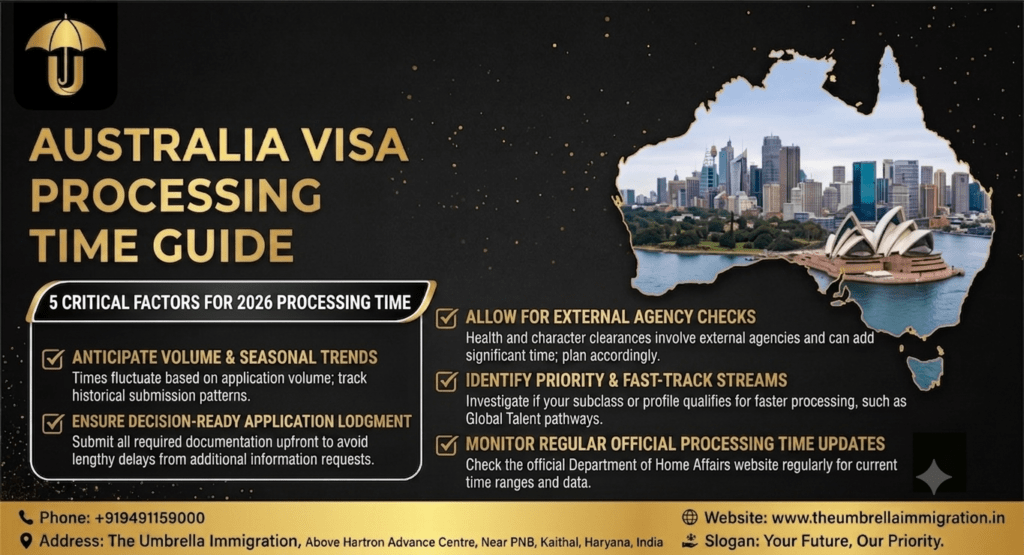
What Affects Your Processing Time?
A few things that determine how quickly your particular application progresses are:
- Completeness — All too often missing documents will slow your application down.
- Health and character checks — These are usually reliant on external agencies and cannot be expedited by the applicant.
- Migration program ceilings — The number of places available for skilled and family visas contributes to timely decision-making.
- Application volumes: Peak periods of demand (e.g, back to school), creep through the process slowing down the entire queue.
- It is done in the order they are lodged, many of the skilled visas have an absolute priority — meaning that older applications will be processed first.
- Nationality and country of residence—In some cases, additional checks are needed depending on the application location.
How to Avoid Unnecessary Delays
- Apply with a complete application, providing all necessary support documents on the first submission.
- If possible, apply via ImmiAccount instead of on paper.
- REPLY TO ANY ADDITIONAL INFORMATION REQUESTS ASAP
- If the dates you are traveling or studying allow some freedom, avoid applying close to a well-known peak period.
- The Department of Home Affairs processing times tool is updated monthly, so check back regularly to see whether figures have moved up or down.
Final Thoughts
Visa processing times in Australia over 2026 remain as it is, very vary wide — from same-day decisions on some visitor and working holiday visas, to a well-over-a-year partner and some skilled and permanent visa. This is for planning purposes only and not a guarantee, however the one thing an applicant can do that would help their application in most situations is to submit a full application with supporting documents as early as possible and then check the government processing times page regularly for more up-to-date numbers.
Disclaimer: This has been written for general information only and should not be considered migration advice. Processing times often change — so always check live numbers on the official Department of Home Affairs site (immi. homeaffairs. Before traveling, enrolling, or moving anywhere else, please visit https://www.Finances.gov.au to obtain scaled-up training.